
Every marketplace order hands the customer relationship to the app. Every direct order hands it to you: a name, an email, a phone number, and permission to say "come back soon." Email and SMS are how you use that permission without annoying anyone.
Here's what to send, how often, and what the compliance basics look like.
Why do email and SMS matter more for restaurants than social media?
Social posts reach whoever the algorithm chooses. Email and SMS reach your list, people who have already ordered from you, on a channel you control. That difference compounds:
- You own the list. No algorithm change can take it away.
- The audience is pre-qualified. Everyone on it has literally bought from you.
- Timing can match hunger. A well-timed message lands while someone is deciding what's for dinner.
The prerequisite is collecting contacts, which is a built-in side effect of direct online ordering. Losing that data is one of the biggest hidden costs of relying on marketplaces, which keep it to themselves.
What messages should a restaurant actually send?
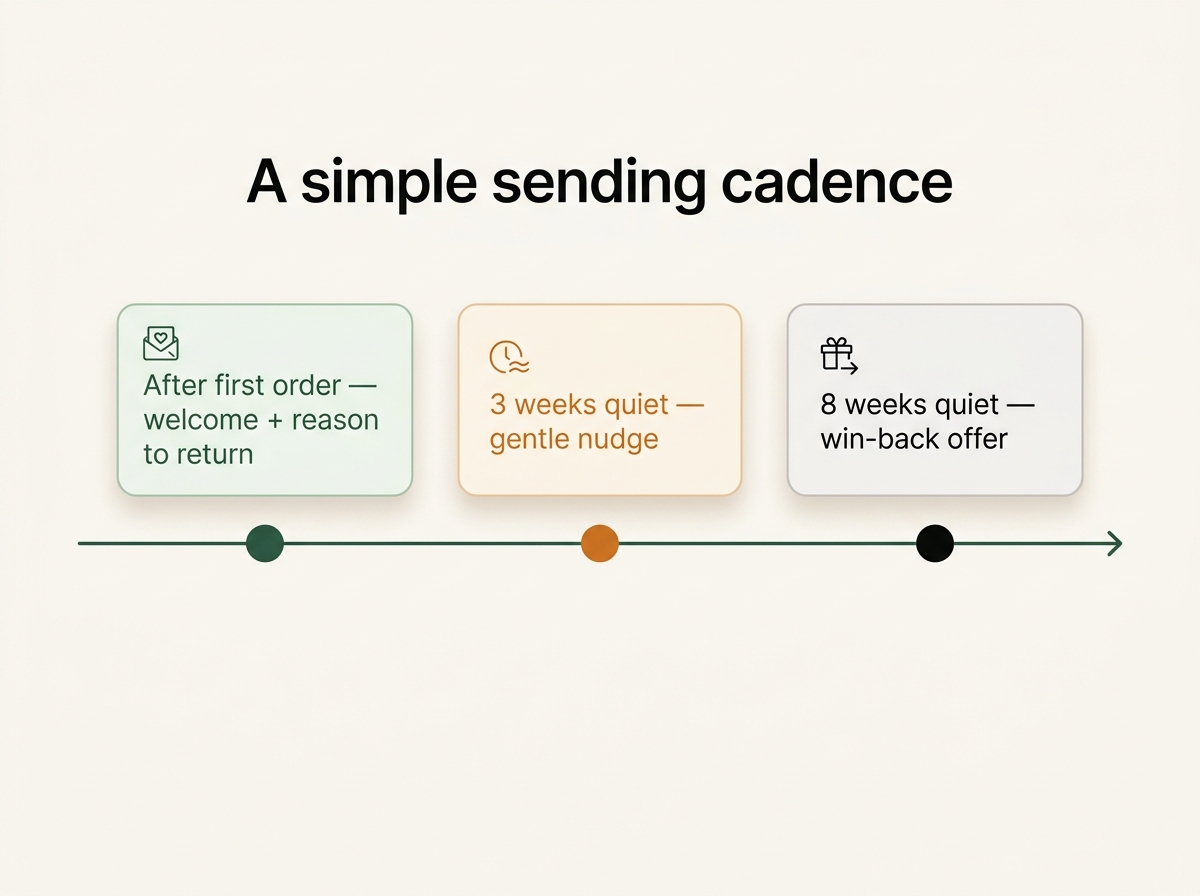
Rank by value, not volume:
1. Post-order follow-ups
Shortly after an order: a thank-you and a review request while the meal is fresh in memory. This single automated message builds the review base that powers your Google presence.
2. Win-back messages
When a previously regular customer goes quiet, a "we miss you" note, ideally with a small incentive, lands at exactly the moment habits are being lost. This is triggered by behavior, which is why automation beats calendars here.
3. Loyalty updates
"You're one order away from a free entrée" is the most motivating message in restaurant marketing, because it's about the customer's progress, not your promotion. (More on program design in the loyalty guide.)
4. New items and specials
New menu launches, seasonal dishes, holiday pre-orders. Genuine news performs; filler doesn't.
5. Time-sensitive nudges
Slow-night promotions, weather-day delivery pushes, event reminders. This is where SMS shines: short, urgent, actionable.
Email vs SMS: which channel for what?
A simple division of labor:
- SMS: short, timely, high-urgency messages (order updates, reward unlocks, tonight's special). Nearly everyone reads texts quickly, which is exactly why the channel must be used with restraint.
- Email: richer, lower-pressure content (new menu showcases with photos, event announcements, monthly news). More room, more forgiveness.
Rule of thumb: if the message loses its value by tomorrow, it's a text. Otherwise, it's an email.
How often is too often?
There's no universal number, but the asymmetry matters: an ignored email costs nothing, while an unwanted text triggers an opt-out, and opt-outs are permanent.
- Email: a steady rhythm of a few sends per month is sustainable if each has a reason to exist.
- SMS: less. A handful of messages a month, each clearly worth an interruption.
- Triggered beats broadcast. Messages tied to a customer's own behavior (their order, their reward, their absence) always feel more relevant than blasts, so you get more results from fewer sends.
Watch opt-out rates. Rising unsubscribes are your list telling you the value-to-noise ratio slipped.
What are the consent rules for texting customers?
In broad strokes (this is general information, not legal advice):
- Get express consent before marketing texts. In the US, the TCPA requires prior permission for marketing messages. A clear opt-in checkbox at checkout or signup, unticked by default, with plain language about what they'll receive, is the standard pattern.
- Disclose and make leaving easy. Say who's texting, roughly how often, and honor STOP requests immediately.
- Transactional vs marketing differ. An order-ready notification is a different category from a promotional blast; don't sneak promotions into transactional messages.
- Keep records. Reputable platforms log consent and handle opt-outs automatically, which is a strong reason not to run SMS from a personal phone and a spreadsheet.
Email has its own rules (accurate sender identity, a working unsubscribe link), which any legitimate email platform enforces by default.
Who's supposed to have time for all this?
Nobody who runs a restaurant, and that's the honest core of this guide. The highest-value messages are all triggered: they depend on noticing that an order just finished, a reward is nearly unlocked, or a regular hasn't been back. Software watches for those moments better than any person juggling a dinner rush.
That's what Menuline's AI marketing does on top of commission-free direct ordering: follow-ups, review requests, win-backs, and loyalty nudges go out automatically, with consent and opt-outs handled. It's included in the Growth plan at $99/month ($1/month for the first 3 months).
The checklist
- Collect email and phone (with explicit SMS opt-in) at checkout
- Automate the post-order thank-you and review request
- Automate win-backs for lapsed regulars
- Send loyalty progress updates
- Reserve SMS for genuinely timely messages
- Watch opt-out rates and adjust
- Use a platform that logs consent and honors STOP instantly
Email and SMS are the "come back" half of growing orders. The full system, including the "find you in the first place" half, is in how to get more online orders.