
Ask ten restaurant owners about loyalty programs and you'll hear both "our regulars love it" and "we printed punch cards once and found the stack in a drawer two years later." Both are real outcomes. The difference isn't luck. It's whether the program's mechanics match how restaurants actually make money.
No invented statistics here; the argument works from first principles.
Why do loyalty programs make economic sense for restaurants?
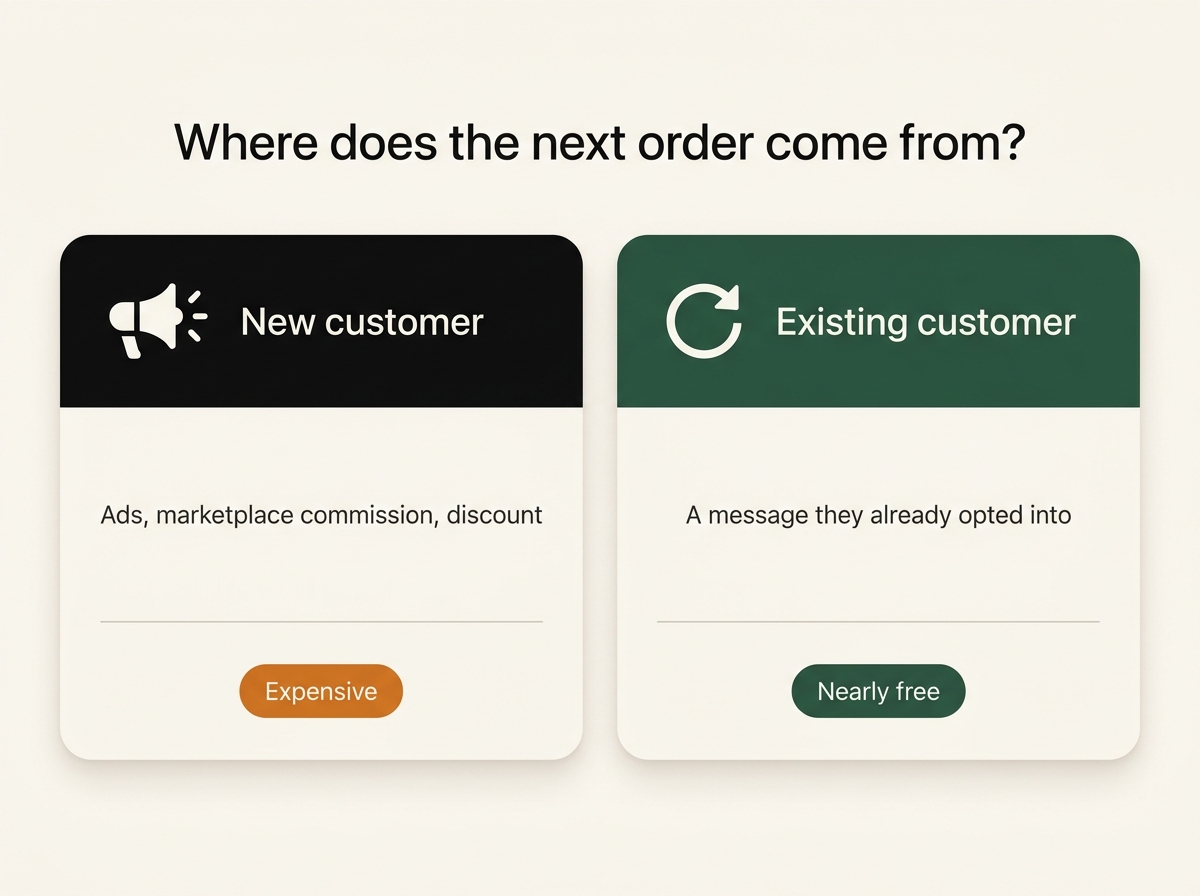
Restaurants are a repeat-purchase business. Nobody needs a new roof every week, but everyone eats every day. The question is where. Your profit doesn't come from any single order; it comes from a customer choosing you again and again over years.
That structure is exactly where loyalty programs have leverage:
- Acquiring a new customer is expensive: ads, marketplace commissions, discounts. Bringing back someone who already knows and likes your food costs almost nothing.
- The choice is frequent and low-stakes. People decide where to eat constantly, often between a few acceptable options. A small nudge ("I'm two orders from a free burrito") is enough to tip a genuinely close decision.
- The reward is cheap at cost. A free menu item costs you food cost, not menu price. If the promise of it generated even one visit that wouldn't have happened, the program can pay for itself.
The honest flip side: a loyalty program only rewards behavior. It can't fix mediocre food, slow service, or a checkout flow that loses people. It amplifies a restaurant people already want to return to.
When do loyalty programs fail?
The failure modes are predictable:
- The reward is too far away. If it takes twenty visits to earn anything, customers mentally write it off before they start. Momentum matters. A reachable first reward keeps people engaged.
- The rules are confusing. Tiered points with exclusions and expiration windows feel like a cell phone contract. If a customer can't explain the deal in one sentence, it isn't influencing their decisions.
- Nobody remembers it exists. A program with no reminders is a program with no effect. The nudge ("you're close to a reward") is where the behavior change actually happens.
- It depends on staff or paper. Punch cards get lost; staff forget to ask during a rush. Programs that require humans to remember things decay within weeks.
Every one of these is a design problem, not evidence that "loyalty doesn't work."
Simple points vs punch cards: which should you use?
Punch cards are charmingly simple and fine for a counter-service coffee shop. But they can't cover online orders, they generate zero data, and they vanish into junk drawers.
Digital points tied to your ordering system fix all three:
- Every direct order earns automatically: pickup, delivery, in-app
- You learn who your regulars are and when they stop coming (which is exactly when a win-back message matters; see the email and SMS guide)
- Reminders happen without staff involvement
Keep the earning rule simple enough to say out loud: "every dollar earns a point, 100 points is a free entrée," or whatever thresholds fit your menu and margins.
How should you fund the rewards?
Think of the reward as marketing spend, paid in food cost:
- Prefer free items over percentage discounts. A free appetizer feels like generosity; "5% off" reads like a rounding error. Free items also cost you their food cost, not their menu price.
- Reward the behavior you want. If the goal is shifting customers off delivery marketplaces, make rewards earnable only on direct orders. That gives customers a concrete reason to order from your site instead of an app that charges you commission. (Here's why that shift matters.)
- Set thresholds against your margins. Price the reward so a customer completing the loop is clearly profitable across the visits it took to earn it.
What does a good restaurant loyalty program look like?
A checklist:
- One-sentence rules a customer can repeat back
- Automatic earning on every direct order, no codes, no punches
- A reachable first reward so new members feel progress fast
- A free item as the reward, not a token discount
- Automated reminders when someone is close to a reward or has gone quiet
- Direct-order exclusivity, so loyalty pulls customers to the channel where you keep the whole margin
Notice most of the list is automation. That's the honest conclusion of everything above: loyalty programs work when they run without anyone having to remember them, customer or staff.
What's the easiest way to run one?
Building this stack yourself (ordering system, points logic, reminder messages) is a project. Menuline includes it: AI-powered loyalty and rewards run on top of commission-free direct ordering, with follow-up messages that go out automatically. It's part of every plan, from $29/month, $1/month for the first 3 months.
Loyalty is one piece of the repeat-business machine; the full picture is in how to get more online orders. And if you want to see how your current setup scores, the free AI grader takes about a minute.